
Osiyo,
For generations of Americans, Route 66 represents freedom, adventure and the promise of the open road. It is woven into our national imagination through music, film, family road trips and stories passed from one generation to the next.
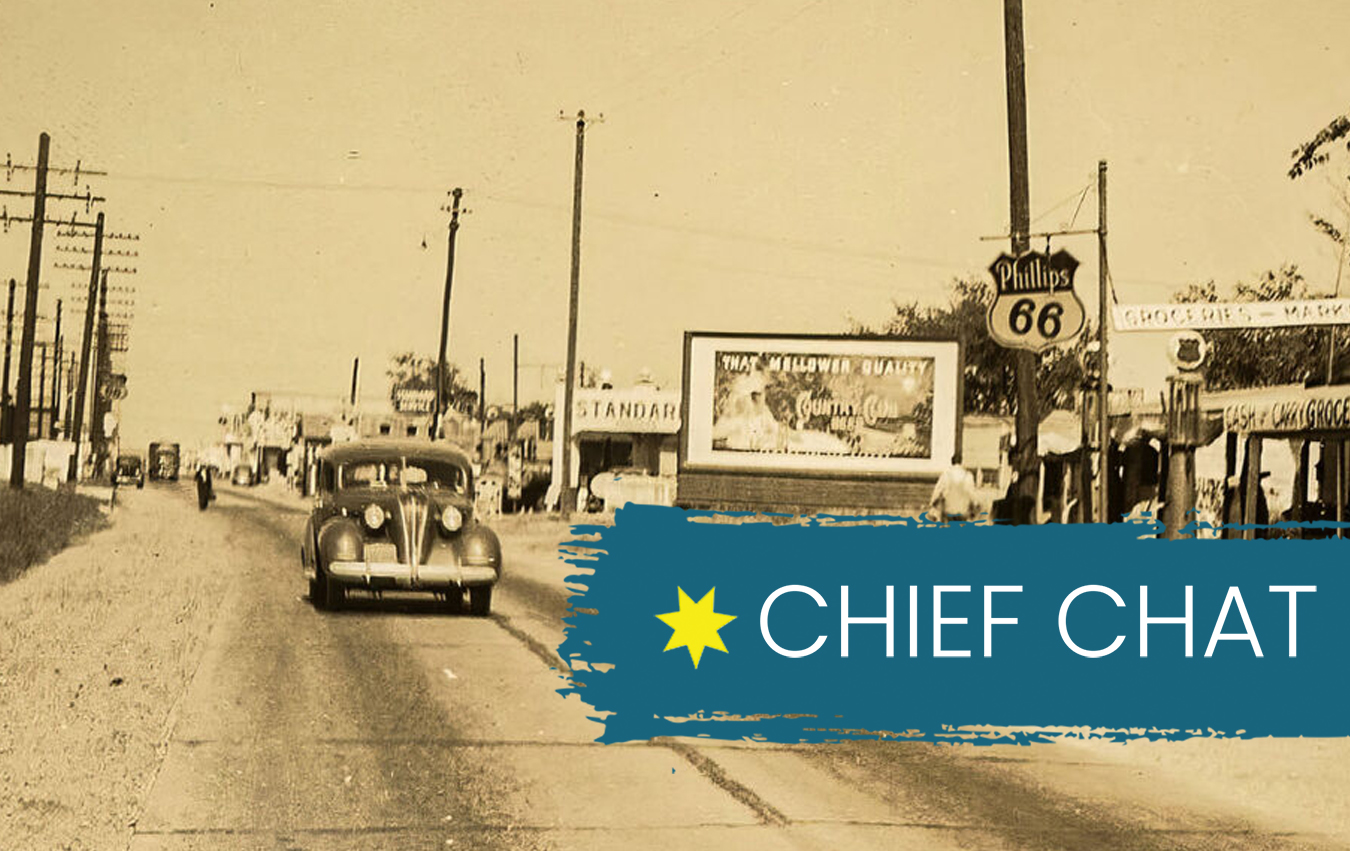
But long before workers paved the “Mother Road” in the 1920s, the pathways that would become Route 66 were already part of the Cherokee story. Long before Oklahoma statehood, Cherokee citizens traveled these corridors to connect communities, conduct commerce and rebuild lives following forced removal and resettlement in Indian Territory.
When Route 66 was officially designated, it cut directly through the heart of the Cherokee Nation Reservation. It came at a time when our people were still enduring the devastating impacts of allotment and federal policies designed to dismantle tribal governments and tribal landholdings. For Cherokee families, Route 66 was not simply a symbol of opportunity. In many ways, it was another change imposed upon our communities during a difficult chapter in our history.
Yet, like so many times before, the Cherokee people adapted.
The historic towns that define Route 66 in northeast Oklahoma — places like Vinita, Claremore, Chelsea, Foyil, Catoosa and Adair — did not suddenly emerge because of the highway. These were Cherokee communities that were built decades earlier through determination, governance and resilience. Route 66 eventually became a tool that connected our people, supported businesses and linked our communities to the broader American story.
Today, as the United States celebrates the Route 66 Centennial, it is important that Cherokee voices are not left out of that story.
That is why I am proud of the Cherokee Nation’s new Route 66 exhibit, which helps tell this unique history through a Cherokee lens. The exhibit, now open at the Anna Mitchell Cultural and Welcome Center in Vinita, highlights not only the evolution of the famous roadway, but also the lives, communities and culture that existed long before cars sped across Oklahoma. Open until February of next year, it reminds visitors that Route 66 is not only a story about travel — it is a story about homeland.
The Cherokee Nation is also helping to ensure that history is experienced in meaningful ways across our reservation today. Through destinations like the Anna Mitchell Center, travelers can learn about Cherokee history and culture while visiting one of the most iconic stretches of the Mother Road. And through other tourism events, like the Andy Payne Route 66 Race in Claremore, we celebrate both Oklahoma and Cherokee connections to this historic highway.
As someone who proudly calls Vinita his hometown, Route 66 has always been very personal to me. I grew up understanding that these roads carried more than cars and commerce. They carried stories. They carried generations of Cherokee families working, rebuilding and moving forward together.
As America celebrates 100 years of Route 66, we invite travelers to also recognize the legacy of the Cherokee Nation. Our history is inseparable from this land, and our future remains deeply connected to it.
The Mother Road tells a story of movement and possibility. The Cherokee Nation’s story is one of resilience, survival and progress. Together, those stories are part of the true history of Route 66.
Wado,
Chuck Hoskin Jr.
Principal Chief