
Osiyo,
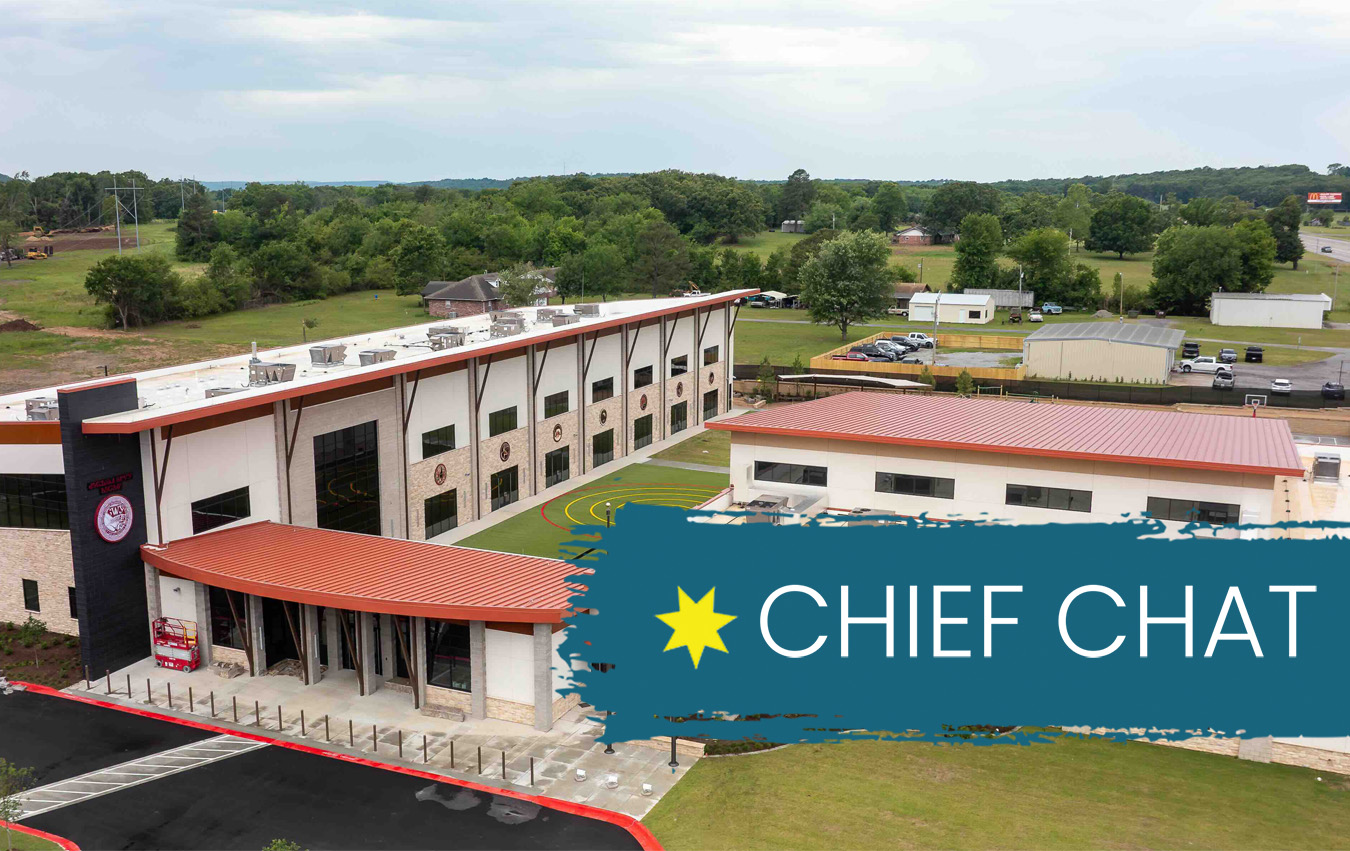
Standing inside the recently opened Cherokee Immersion Middle School in Tahlequah, I saw much more than a new building. Beyond the welcoming atmosphere for learning, I saw another answer to generations of policies, including the boarding school era, that discouraged — and even punished — our ancestors for speaking Cherokee. Today, we know the solution is to invest in our language, support our teachers and fluent speakers, and give young Cherokees every opportunity to carry Cherokee culture forward.
The $30 million new school, formally called the School of the Seven Directions Cherokee Immersion Middle School, represents progress in one of our core missions: perpetuating the Cherokee language. It gives our immersion students and educators a world-class learning environment that is rooted in Cherokee culture and designed specifically around the work they do every day.
Most of all, I hope every young person who walks through the doors receives a clear message: your Nation loves you, your language matters and what you are doing here is important to all of us.
When Deputy Chief Bryan Warner and I took office in 2019, Cherokee Nation was already in a race against time. Generations of federal policies had deliberately suppressed Native languages. Even as those policies subsided, we continued losing precious, first-language Cherokee speakers to time.
That year, we worked with the Council of the Cherokee Nation to enact the Durbin Feeling Language Preservation Act. It was about funding, but it was also about focus. We elevated language preservation to the highest levels of our government and made clear that protecting the language must be a responsibility shared across the entire Cherokee Nation.
In the ensuing years, we have committed more than $182 million to language preservation, and we are on track to surpass $200 million before my administration leaves office. This year alone, our language department’s operating investment will exceed $28 million.
Those investments support immersion education, second-language learners, translation and technology, and vital services like home repairs for our fluent-speaking elders. If we are asking Cherokee elders to help save our language, then Cherokee Nation must be there for them, too.
However, buildings and budgets alone cannot save a language — people do.
That is why I am so grateful for Howard Paden, the executive director of our language programs, our fluent speakers, teachers, staff, families and, especially, our students. Their work and conviction give me confidence that Cherokee can once again become a thriving language in our homes and communities.
The students learning at the facility today will become the Cherokee elders of the late 21st century. The question before us is: What kind of Cherokee Nation will they inherit? It is my sincere hope to leave a Nation where Cherokee is once again flourishing, spoken throughout our communities and passed naturally from one generation to the next.
The work of our immersion students, staff and leadership takes place in the context of an “all of the above” approach to language preservation at Cherokee Nation. For example, as we invest mightily in immersion education, we continue to expand ways to bring language learning to public schools, adapt language learning to technology and provide community-based language enrichment classes. To succeed on the mission of language revitalization, we truly must be all in it together.
Centuries of suppression, removal and dispossession took an enormous toll on our language. Today, the policies of the Cherokee Nation are pointed toward restoration.
This school is powerful evidence of that commitment. It tells future generations that when the Cherokee language needed us, we answered. If we keep answering that call every day, the best days of the Cherokee language are still ahead of us.
Wado,
Chuck Hoskin Jr.
Principal Chief