
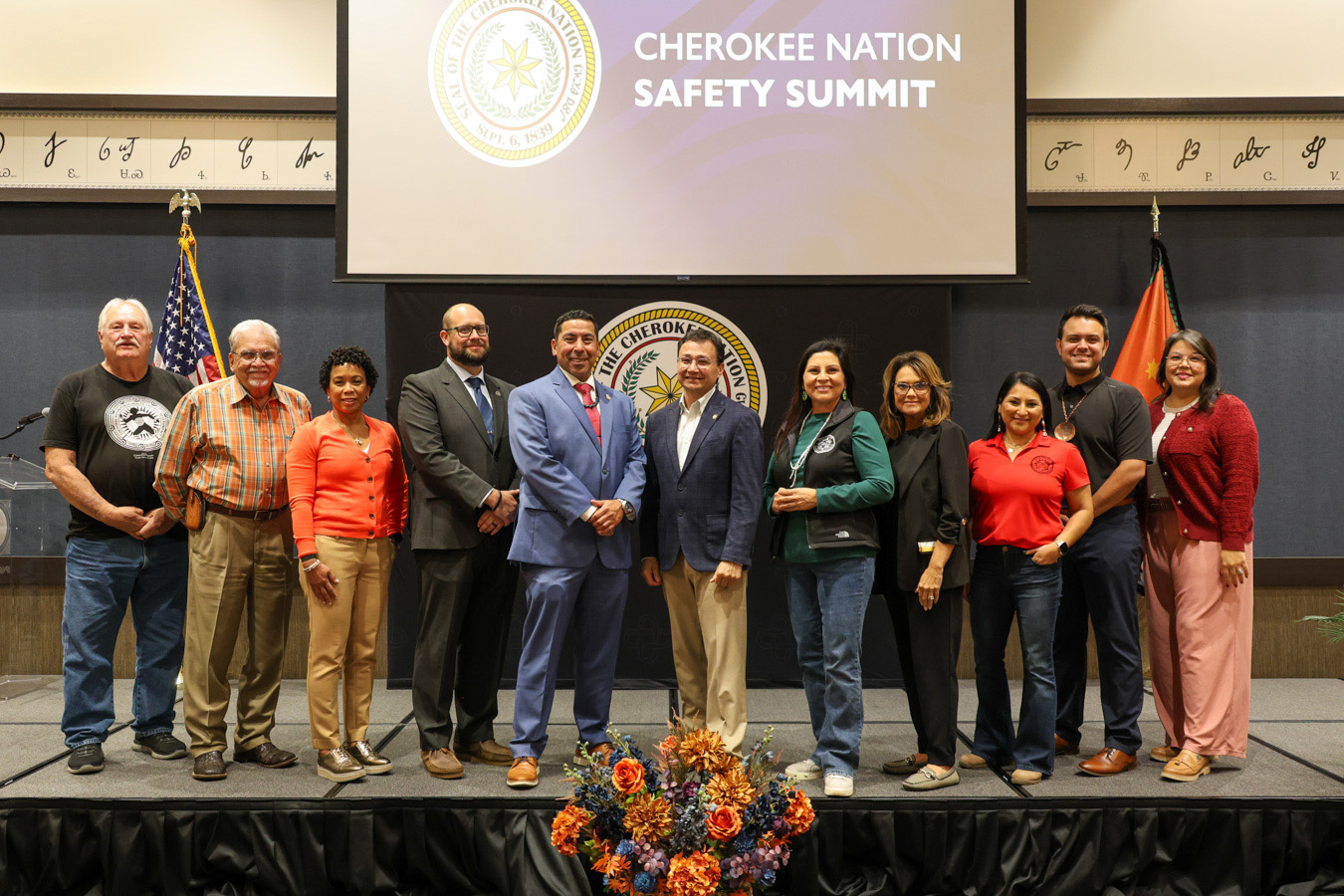
TAHLEQUAH, Okla. — Cherokee Nation will invest $10 million to install or upgrade outdoor warning sirens at 260 locations across the Cherokee Nation Reservation and spend $3.1 million on residential tornado shelters, Principal Chief Chuck Hoskin Jr. announced Wednesday during the Marshal Service Safety Expo at the Chota Conference Center.
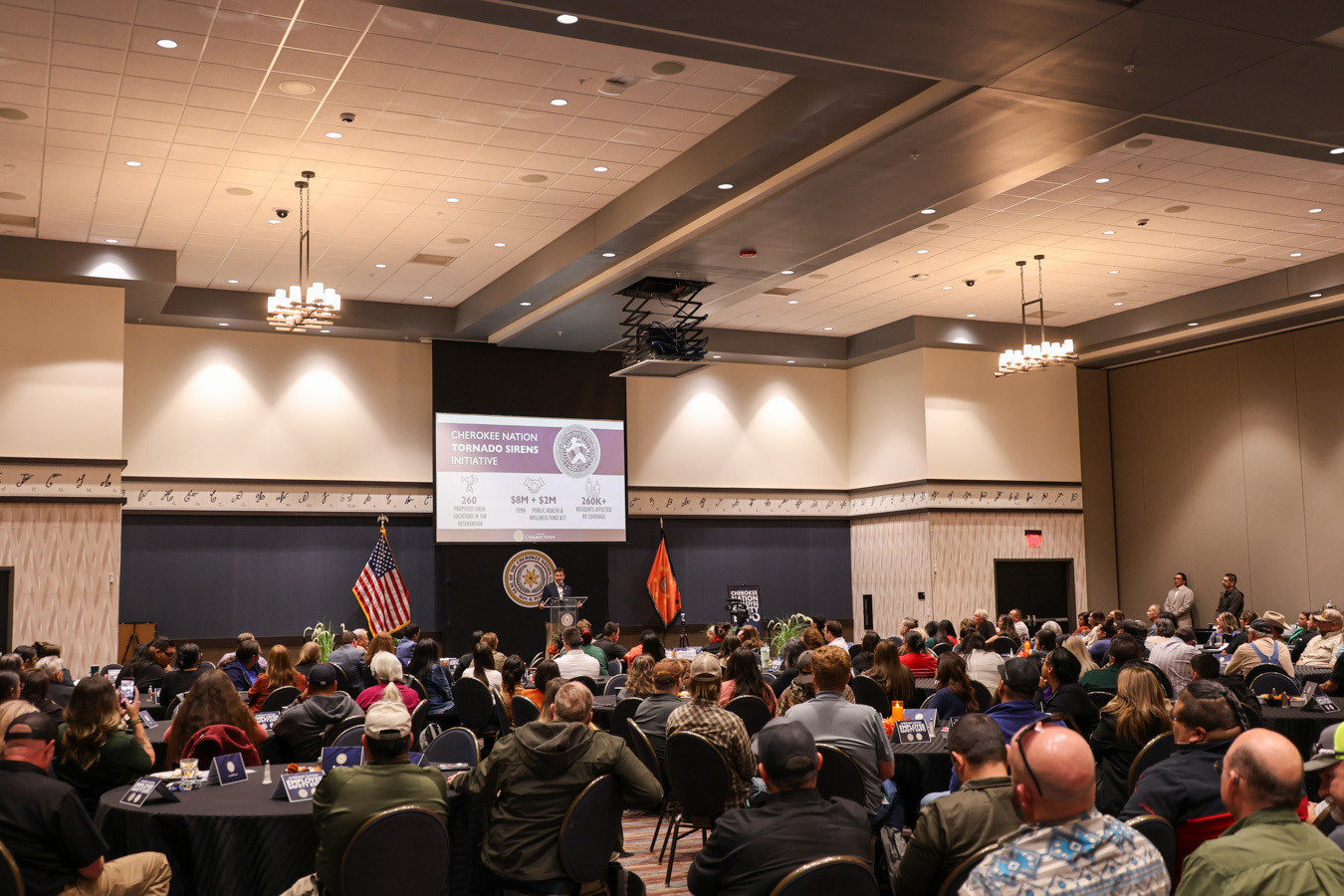
The tribe received an $8 million Next Generation Early Warning Systems Grant from the Federal Emergency Management Agency. Cherokee Nation is also committing up to $2 million in tribal funds through the Public Health and Wellness Act to fully fund the project.
In the first phase of the initiative, engineering analysis and coverage modeling found significant gaps in tornado siren coverage across the 14-county reservation. In some areas, residents have limited, inconsistent or no access to outdoor warning systems. Once the new sirens are installed, the assessment estimates that about 261,180 residents will be within their coverage.
“Severe weather is a fact of life in northeastern Oklahoma, and every family on the reservation deserves to hear the warning when danger is headed their way,” Principal Chief Chuck Hoskin Jr. said. “Cherokee Nation has a responsibility to prepare for emergencies before they happen. With this $10 million initiative, we are closing critical gaps so more people receive potentially lifesaving warnings when storms threaten our communities.”
Cherokee Nation will work with counties, municipalities and emergency management partners across the reservation to improve warning capabilities. Counties and municipalities will continue to own, maintain, operate and activate their local warning systems.
“Public safety is a shared responsibility, and we are strongest when we work together,” Deputy Chief Bryan Warner said. “This project is built on careful analysis of where people live and where coverage falls short. By partnering with our local governments and first responders, we can make sure these investments reach the communities that need them most.”
The 260 proposed gap-fill sites span all 14 counties on the reservation.
“When a tornado is bearing down, every second counts,” Cherokee Nation Marshal Daniel Mead said. “Outdoor warning sirens are one of the most important tools we have to alert people who may be outside, on the road or away from their phones. Strengthening this system gives residents more time to get to safety and gives our first responders and local partners a stronger foundation to protect the communities we serve.”
Cherokee Nation Procurement will soon open a bid process for all 260 sites. The bids will cover outdoor warning equipment, site infrastructure and construction services.
Chief Hoskin also announced $3.1 million in existing and new tribal funding for the Housing Authority of the Cherokee Nation's residential storm shelter program. The funding will serve low-income Cherokee elders and citizens with disabilities who live on the reservation and are on the program's waiting list. It will also allow HACN to accept new applicants this fiscal year.
While the sirens warn residents of approaching storms, the HACN residential storm shelter program gives vulnerable Cherokee families a safe place to go once a warning sounds. The $3.1 million investment comes from two tribal funding sources:
- $1.6 million from existing Housing, Jobs and Sustainable Communities Act funding will cover a recent bid for 200 residential storm shelters.
- $1.5 million in new Public Health and Wellness Fund Act funding will clear the program's entire waiting list, with funding to spare so HACN can take new applications.
The tribe’s Housing Authority recent bid out shelter construction for 200 applicants using the existing HJSCA funds and will immediately begin the process of eliminating the waiting list using the new PHWFA funding.
Chief Hoskin says funding is in place under HJSCA to continue building storm shelters for low-income elder citizens and citizens with disabilities living within the reservation annually.
The tribe’s housing authority also offers income and residency eligible applicants opportunities to construct their own storm shelters using the I-Save program, which matches savings 4 to 1 for eligible housing rehab projects.
Together, the siren initiative and the storm shelter funding total $13.1 million in tribal investments in severe weather preparedness across the reservation.